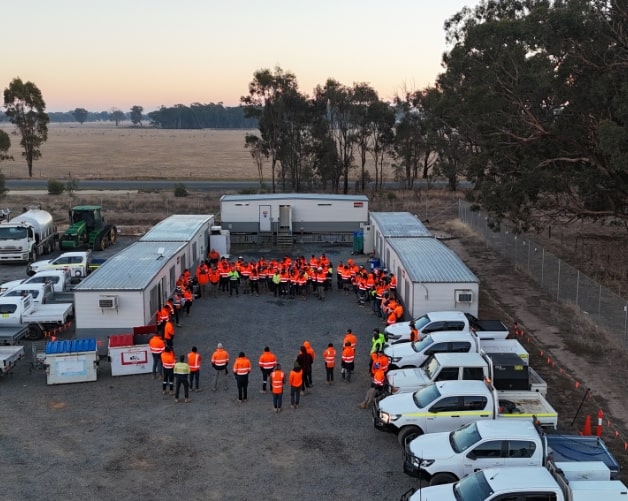
At AEC, safety communication is evolving with the introduction of Safety Learning Bulletins. The Learning Bulletins represent an innovative step forward in how AEC shares knowledge, encourage consultation, and strengthen decision-making across our workforce.
The learning bulletins represent an important step forward in how knowledge is shared across the business, encouraging greater consultation, discussion and learning rather than simply communicating what happened after an incident.
While traditional Safety Alerts remain an important tool for communicating immediate actions following an event, Learning Bulletins take a broader approach. They encourage colleagues to explore why conditions existed, how risks were managed and what lessons can be applied across different projects and work environments.
The aim is simple: create meaningful conversations that help people make better-informed decisions every day.
Encouraging a different conversation
At the core of each Learning Bulletin is the belief that our people are more than recipients of safety information. They are active participants in creating safe outcomes.
Rather than simply issuing new instructions, the bulletins encourage colleagues to ask questions, discuss ideas within their teams and consider how the learning applies to their own work.
This recognises that while procedures and systems provide an essential framework, the people carrying out the work have valuable knowledge and experience that helps identify risks, strengthen controls and improve how work is delivered.
By encouraging discussion rather than simply issuing direction, Learning Bulletins help build a stronger culture of consultation and shared learning.
Looking beyond the incident
Traditional Safety Alerts are designed to communicate the facts of an incident and identify the actions needed to prevent it happening again. Learning Bulletins go a step further.
Rather than focusing only on what happened, they explore why the circumstances existed, what controls were in place and how similar situations can be recognised before an incident occurs.
Each bulletin includes bow-tie diagrams, to show how hazards, controls and potential consequences are connected. By identifying the hazardous energies involved, colleagues can better recognise similar risk patterns across different tasks, projects and locations.
This shifts the focus from remembering individual incidents to understanding the conditions that create risk and the controls that prevent harm.
Sharing success as well as lessons learned
Learning Bulletins are not limited to situations where something has gone wrong.
They can also be used to share examples of good practice, innovation and successful risk management across the business.
Too often, valuable learning remains within individual projects. A team that develops a safer way of working, identifies a risk before it becomes an incident or introduces an innovative control may never have the opportunity to share that experience more widely.
The Learning Bulletins provide a platform to recognise and communicate these successes, ensuring good ideas can be adopted across the wider business.
Strengthening our safety culture across ANZ
Safe work is not created by procedures alone. It is strengthened through informed decisions, open conversations and a willingness to learn from both challenges and successes.
By encouraging our teams to think critically, share experiences and contribute their own insights, the Learning Bulletins help build a stronger understanding of risk across the organisation. As our ANZ operations continue to grow, this new approach will help ensure safety learning remains practical, relevant and shaped by the people closest to the work.